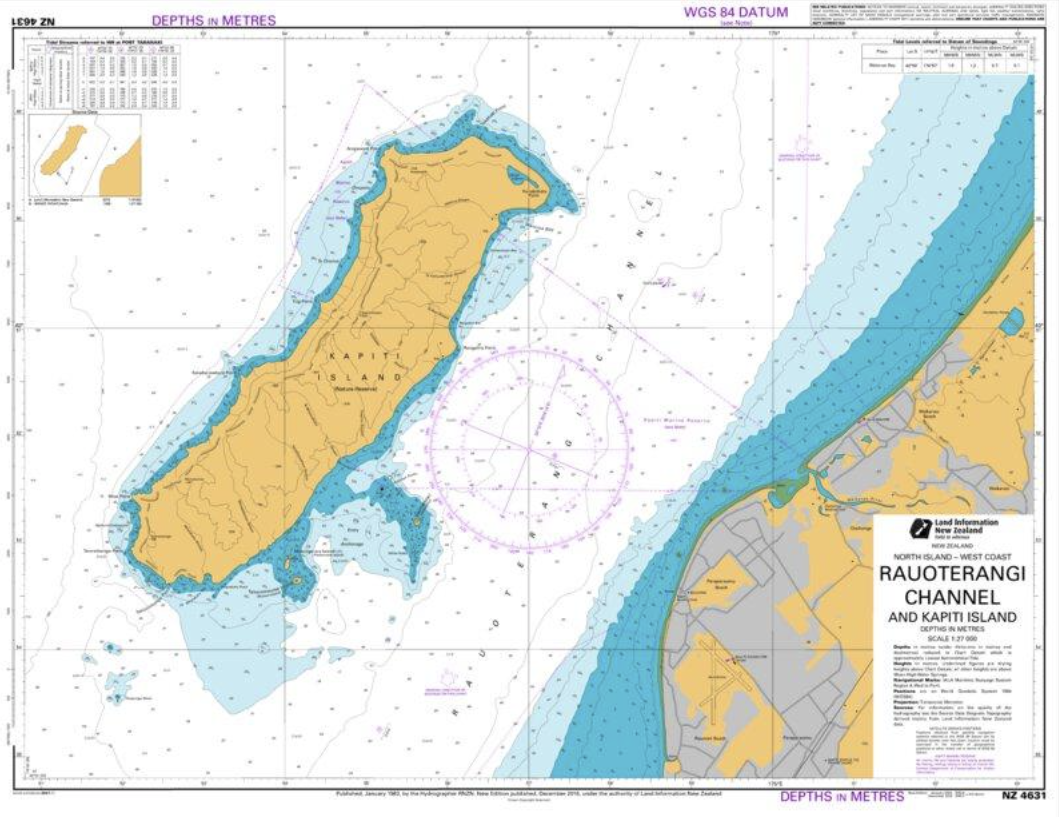
Kāpiti as Cook Strait hub
Kāpiti was strategically positioned for shipping, trade, whaling and movement across Te Moana-o-Raukawa.
The historical record
Kāpiti Island stood within a connected Cook Strait maritime world. Whaleboats worked the coast and offshore islets, while vessels carried oil, whalebone, stores, people and correspondence between whaling stations and ports.
Nigel Prickett’s archaeological study treats Kāpiti alongside stations at Mana, Korohiwa, Paremata and Te Kopi in Palliser Bay. The same study identifies the account of Edward Jerningham Wakefield and Alexander Fraser’s 1840–42 Long Point ledger as unusually detailed records of local operations.
The connections were economic as well as geographical. Fraser’s accounts describe supplies, equipment, freight to and from Sydney, and wages or payments to headsmen, pulling hands, tonguers, coopers, carpenters and clerks.
Historical source: Nigel Prickett, The Archaeology of New Zealand Shore Whaling (2002), Kāpiti chapter, pp. 83–97; drawing on Dieffenbach, Wakefield, contemporary station records and archaeological surveys.