An Archaeological Reconnaissance of the Shore Whaling Industry on Kapiti Island
An Archaeological Reconnaissance of the Shore Whaling Industry on Kapiti Island — Nigel Prickett — 1983
The historical record
Archaeology and the whaling record
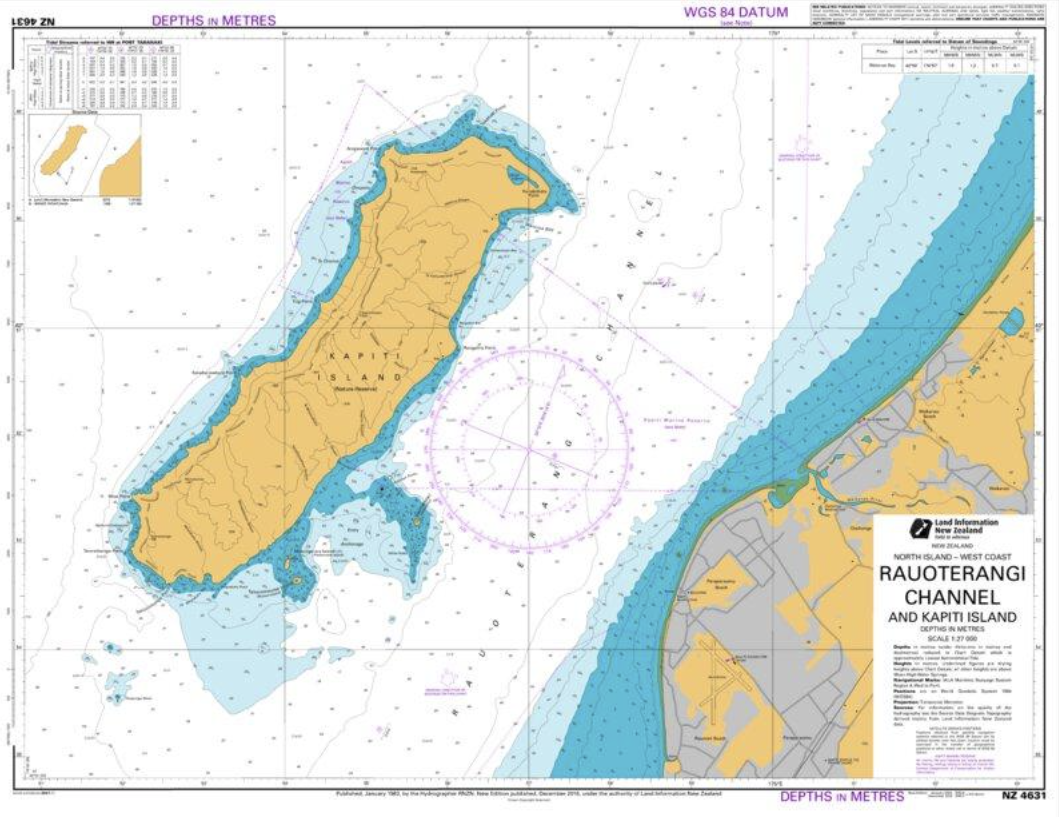
Nigel Prickett’s The Archaeology of New Zealand Shore Whaling (2002) brings together nineteenth-century eyewitness accounts, station ledgers, maps and surviving physical remains. Its Kāpiti section covers stations on Kāpiti and Mana islands and the neighbouring mainland.
At Motungarara, for example, Prickett recorded dry-stone walls beneath coastal vegetation. At Long Point, Alexander Fraser’s 1840–42 accounts illuminate provisions, wages, equipment and shipping costs. Read together, such sources reveal both the physical station and its working economy.
Sources: Nigel Prickett, The Archaeology of New Zealand Shore Whaling (2002), pp. 83–97.
What the ground still remembers
Nigel Prickett’s An Archaeological Reconnaissance of the Shore Whaling Industry on Kapiti Island appeared in Records of the Auckland Institute and Museum, volume 20 (1983), pp.41–63. Field reconnaissance documented physical features that the written records alone could not preserve, including working areas, stone remains and evidence associated with coastal landing places.
The longer research trail
Prickett returned to these questions in The Archaeology of New Zealand Shore Whaling (2002). At Te Kahuoterangi, an early observer recorded roughly twenty stone hearths in 1910, while Prickett distinguished nine remains in 1982. This comparison illustrates why a historical inventory must record the date and observer of each count, not simply report a single number.
Explore connected books
Explore connected history
- Prickett Kāpiti archaeological reconnaissance
- Archaeological research distinguishes confirmed from unconfirmed whaling sites
- Did shore whaling rapidly reduce southern right whale numbers?
- Prickett national archaeological inventory
- Heritage-listed Te Kahuoterangi
- The Archaeology of New Zealand Shore Whaling — Nigel Prickett (2002)
Follow this history into other books
Continue with these connected accounts. Each opens a separate book with its own evidence and perspective.
Illustrative material from the research image collection