
Tryworks: Fire, Iron and Whale Oil
An illustrated historical volume tracing equipment, working lives and documentary evidence in the Kāpiti and Cook Strait whaling world.
Where the station became an industry
The tryworks were the processing heart of a shore-whaling station. Blubber was heated in large iron pots, often set into stone or brick hearths, to separate oil from tissue. Firewood, pots, masonry, water, containers and skilled labour were all needed. A successful chase was only the beginning of the work.
Trypot versus tryworks
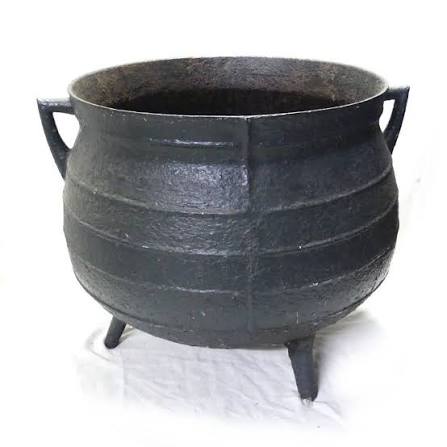
A trypot is the vessel in which blubber was rendered; the tryworks is the larger installation of pots, hearths, fuel supply and work area. One pot shown in a museum photograph does not establish the arrangement of a whole station. Similarly, an excavated hearth may support a whaling interpretation but still require contextual investigation.
Kāpiti’s physical record
At Te Kahuoterangi, accounts discussed by Prickett describe numerous hearth remains, with fewer surviving when the site was surveyed later. A two-bay trypot stand is described in the archaeological study. At Waiorua, a 1907 report referred to a large trypot and stone furnace still visible at the landing. These are specific Kāpiti evidence trails, unlike generic illustrations of a tryworks.
The scale of production
For the Kāpiti–Mana grouping, an 1839 historical snapshot records six stations, 23 boats, 466 tuns of black oil and 30 tons of whalebone. These figures describe a regional station grouping and do not provide the number of individual whales or the yield of any one pot. Tuns of oil must not be silently converted to whales caught.
What to seek in the archives
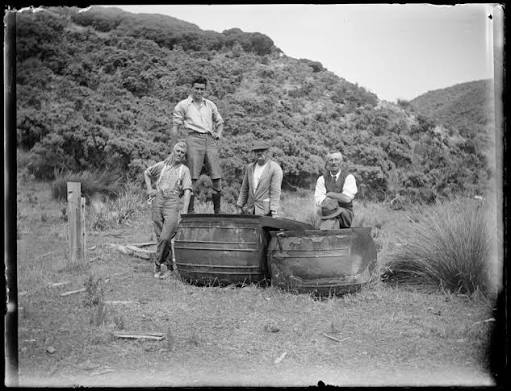
Trypot dimensions, manufacturer marks, pot counts, furnace plans, fuel purchases and dated photographs would permit a more exact reconstruction. The photographs below are archive references, not proven photographs of the Waiorua or Te Kahuoterangi remains.

Sources and further connections
Nigel Prickett, The Archaeology of New Zealand Shore Whaling (2002), especially the discussion of station remains and Kāpiti sites, pp. 83–97; Whale Song, Kāpiti – Blood, Oil and Bone (2025).
Read alongside Harpoons: The First Strike · Lances, Lines and the Whale Hunt · Flensing: Knives, Spades and Cutting-in · Whaleboats, Crews and Station Life · Coopers, Barrels, Oil and Baleen ·