
Coopers, Barrels, Oil and Baleen
An illustrated historical volume tracing equipment, working lives and documentary evidence in the Kāpiti and Cook Strait whaling world.
A catch was not finished when the oil cooled
After rendering, oil needed sound containers. Coopers made and repaired casks whose staves, hoops and joints had to withstand transport and leakage. Barrels were an essential part of the business, not merely packaging: their cost, supply and condition shaped the profitability of a station.
Two very different products
Whale oil was rendered from blubber and traded for lighting and industrial uses; baleen—often called whalebone in nineteenth-century returns—was the flexible filtering material from baleen whales, not the animal’s skeletal bone. It had uses in garments and manufactured goods. Sperm-whale oil and other whale oils could be recorded separately in shipping returns.
Reading the numbers properly
The Wallaby account reports twelve right whales taken over five months in New Zealand waters in 1842, with approximately 50 tuns of right-whale oil and baleen; this is not a Kāpiti-only catch. The Fortitude return reported in 1843 gives 17 tuns of sperm oil, 167 tuns of right-whale oil and seven tons of baleen; this is not a Kāpiti station return. Keep the vessel, period, geographic scope and original units attached to every number.
What a ledger may reveal
Cooperage entries, cask purchases, hoop iron, storage, cartage, freight and sales can illuminate the cost of moving oil from the beach to distant markets. A single shipping notice may identify an exported cargo without revealing where every whale was caught.
What the images show
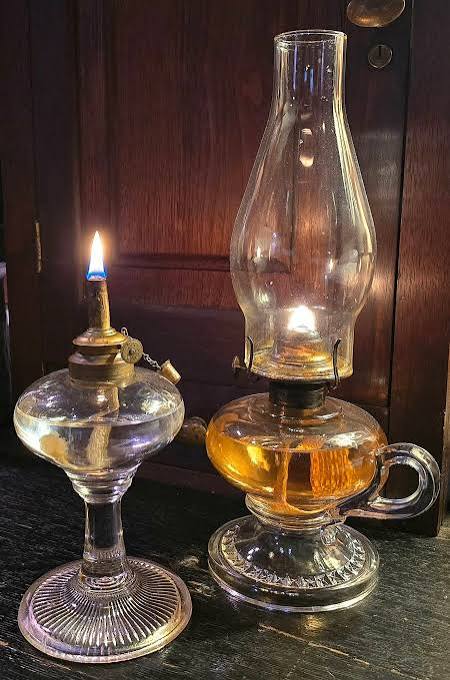
The archive’s lamp photographs help explain a market for whale oil, but the lamps are not proof of where any particular cargo was consumed. Illustrations of candles or barrels are useful context when explicitly captioned as such.
Sources and further connections
Nigel Prickett, The Archaeology of New Zealand Shore Whaling (2002), especially the discussion of station remains and Kāpiti sites, pp. 83–97; Whale Song, Kāpiti – Blood, Oil and Bone (2025).
Read alongside Harpoons: The First Strike · Lances, Lines and the Whale Hunt · Flensing: Knives, Spades and Cutting-in · Tryworks: Fire, Iron and Whale Oil · Whaleboats, Crews and Station Life ·