
Whaleboats, Crews and Station Life
An illustrated historical volume tracing equipment, working lives and documentary evidence in the Kāpiti and Cook Strait whaling world.
Six people in a very small craft
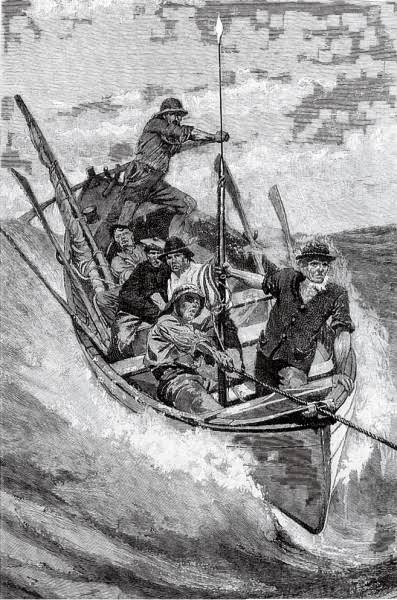
Shore whaleboats launched from exposed beaches, approached moving whales with line and irons, and returned through the surf. Built for speed and manoeuvrability rather than comfort, they commonly carried six men working together in confined conditions.
Headsmen, boat-steerers and oarsmen
The headsman directed the chase, the harpooner or boat-steerer handled the iron, and oarsmen drove the boat. Crews needed coordination and practical knowledge of tides, weather and the animals. Workers ashore—coopers, carpenters, cooks, clerks and others—were equally necessary to turn a catch into a saleable commodity.
People omitted from a simple tally
A station return counting boats and men may omit women, children, Māori suppliers and people whose labour was not entered as a formal wage. Fraser’s Long Point accounts offer a rare opportunity to trace named and paid work, but account books are not a complete social census.
The Waiorua record
Published returns reproduced by Prickett record Waiorua with five boats and 40 men in 1844; four boats and 43 men in 1845; four boats and 40 men in 1846; and two boats and 16 men in 1847.
Sources and further connections
Nigel Prickett, The Archaeology of New Zealand Shore Whaling (2002), especially the discussion of station remains and Kāpiti sites, pp. 83–97; Whale Song, Kāpiti – Blood, Oil and Bone (2025).
Read alongside Harpoons: The First Strike · Lances, Lines and the Whale Hunt · Flensing: Knives, Spades and Cutting-in · Tryworks: Fire, Iron and Whale Oil · Coopers, Barrels, Oil and Baleen ·